Some images taken on a recent holiday trip down the Danube from Budapest to the Iron Gates Gorge (Serbia) and back.
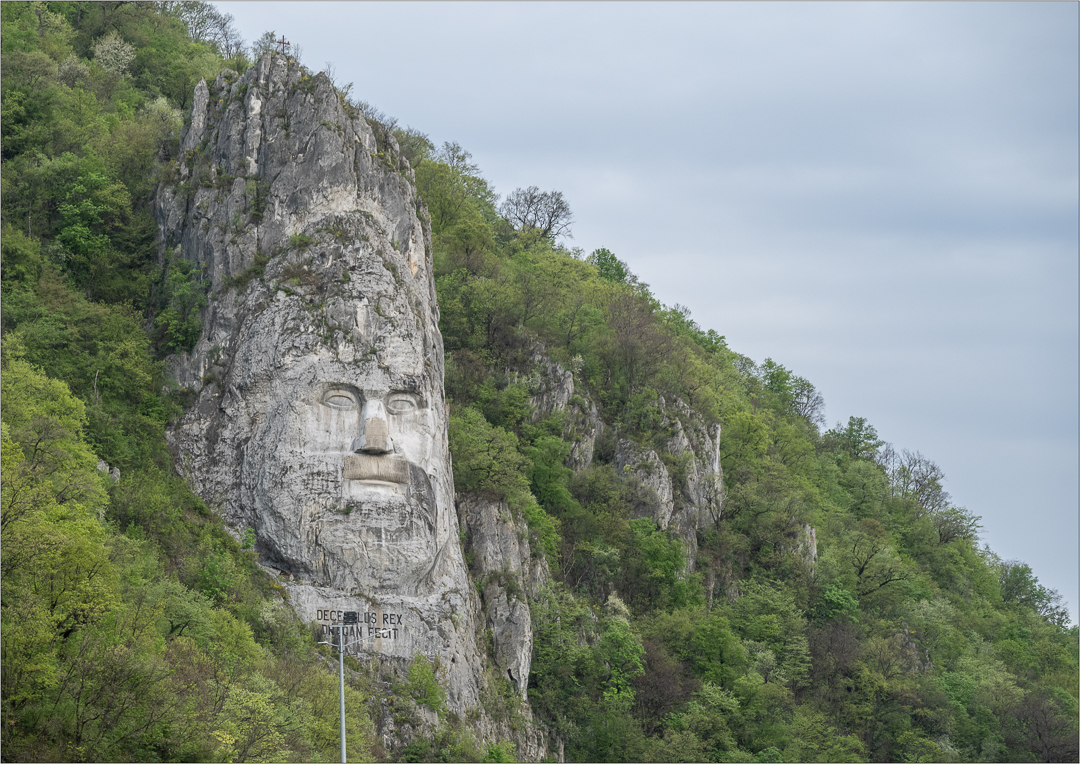
Day 4 – A full day today, up at 5:30am to see the Iron Gates and the rock sculpture of Decebalus, I was the only one up at that time and it was raining but we were just entering the start of the mountains so hung about until other people started to come up onto the top deck to see the Iron Gates. The times were a bit off as we were running along a change in time zone with Serbia and Romainia being an hour apart and either side of the rive which played havoc with automatic watches and mobiles. We were told it would be around 08:00 when we were due to go through, but we were already seeing the cliffs at 06:50 (Serbian time). As I was already out and about I didn’t miss anything, we turned around after the first pass and started the long journey back to Budapest, passing through the Iron gates a second time (this time more people were watching). It was then onto Donji Milanovac and a look around, what our guide in the afternoon said was the smallest and newest town in Serbia, it was certainly small. After lunch we left the ship for the afternoon and visit Lepiski Vir (Archaeological site) before a final trip to look around the Golubac Fortress, finally rejoining the ship there.
Iron Gates

The Iron Gates forms part of the boundary between Serbia (to the south) and Romania (north). At this point in the Danube, the river separates the southern Carpathian Mountains from the northwestern foothills of the Balkan Mountains. The Romanian side of the gorge constitutes the Iron Gates Natural Park, whereas the Serbian part constitutes the Đerdap National Park. Archaeologists have named the Iron Gates mesolithic culture, of the central Danube region circa 13,000 to 5,000 years ago, after the gorge. One of the most important archaeological sites in Serbia and Europe is Lepenski Vir (See below), the oldest planned settlement in Europe, located on the banks of the Danube in the Iron Gate gorge.
Wikipedia


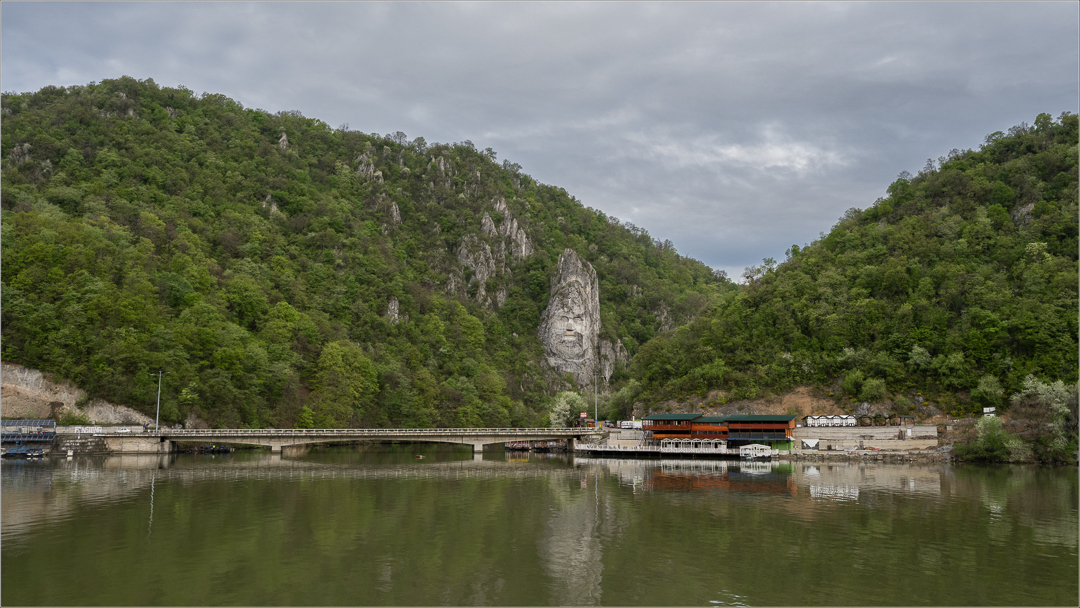
The rock sculpture of Decebalus is a colossal carving of the face of Decebalus (r. AD 87–106), the last king of Dacia, who fought against the Roman emperors Domitian and Trajan to preserve the independence of his country, which corresponds to present-day Romania.
The sculpture was made between 1994 and 2004, on a rocky outcrop on the river Danube, at the Iron Gates, which form the border between Romania and Serbia. The Dacian king’s sculpture is the tallest rock relief in Europe, at 55 m (180 ft) in height and 25 m (82 ft) in width. It was commissioned by Romanian businessman Iosif Constantin Drăgan and it took 10 years for twelve sculptors to complete it. The lead artist sculptor was Florin Cotarcea, from Orșova. According to Drăgan’s website, the businessman purchased the rock in 1992, after which the Italian sculptor Mario Galeotti assessed the location and made an initial model. The first six years involved dynamiting the rock into the basic shape, and the remaining four years were devoted to completing the detail.


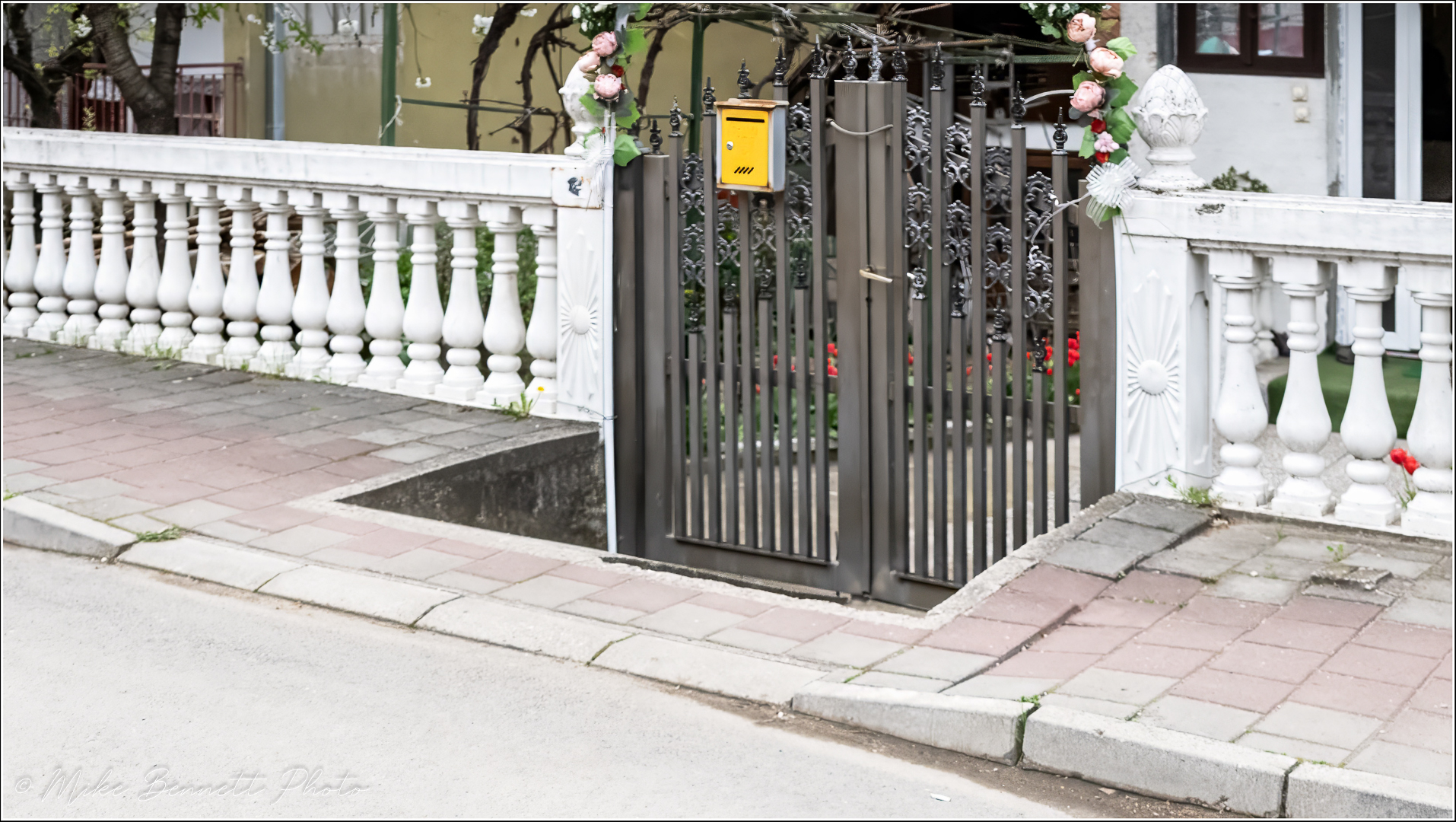
Donji Milanovac


Serbian Orthodox Church of St. Nicholas

Lepenski Vir


Lepenski Vir is located in Serbia, is an important archaeological site of the Lepenski Vir culture. It includes Mesolithic Iron Gates Hunter-Gatherers period and transition to Early Neolithic Early European Farmers period of the Balkans.
Wikipedia
The latest radiocarbon and AMS data suggests that the chronology of Lepenski Vir spans between 9500/7200 and 5500 BC, divided into Early–Middle Mesolithic, Late Mesolithic, Transition and Neolithic. There is some disagreement about when the settlement and culture of Lepenski Vir began, but the latest data indicates that it was between 9500 and 7200 BC. The late Lepenski Vir (6300–6000 BC) architectural phase saw the development of unique trapezoidal buildings and monumental sculpture, related with the mixing of Iron Gates Hunter-Gatherers with newly arrived Early European Farmers. The Lepenski Vir site consists of one large settlement with around ten satellite villages. Numerous piscine sculptures and peculiar architectural remains have been found at the site.


Lepenski vir – Artefacts


Golubac Fortress

The Golubac Fortress was a medieval fortified town on the south side of the Danube River, 4 km (2.5 mi) downstream from the modern-day town of Golubac, Serbia. According to recent discoveries, the fortress, which was built during the 14th century by Medieval Serbian state, is split into three compounds which were built in stages. It has ten towers, most of which started square, and several of which received many-sided reinforcements with the advent of firearms. Towers were not connected for easier defense. Serbian Medieval frescos were recently found inside the fortress.
Wikipedia
Golubac Fortress has had a tumultuous history. Prior to its construction it was the site of a Roman settlement. During the Middle Ages, it became the object of many battles, especially between the Ottoman Empire and the Kingdom of Hungary. It changed hands repeatedly, passing between Turks, Bulgarians, Hungarians, Serbs, and Austrians, until 1867, when it was turned over to the Serbian Knez, Mihailo Obrenović III. In the 21st century it is a popular tourist attraction in the region and a sightseeing point on Danube boat tours.
The fortress has a distinction of successfully repelling over 120 attacks.


